
HD-20×1600 Hydraulic 3-Roll Cone Plate Rolling Machine
A purpose-built hydraulic cone rolling machine with three tapered working rolls for forming metal cones, reducers, hoppers and conical shells up to 20 mm thick and 1600 mm wide, based on a reference material yield strength of 245 MPa.
Conical Plate Bending for Industrial Metal Fabrication
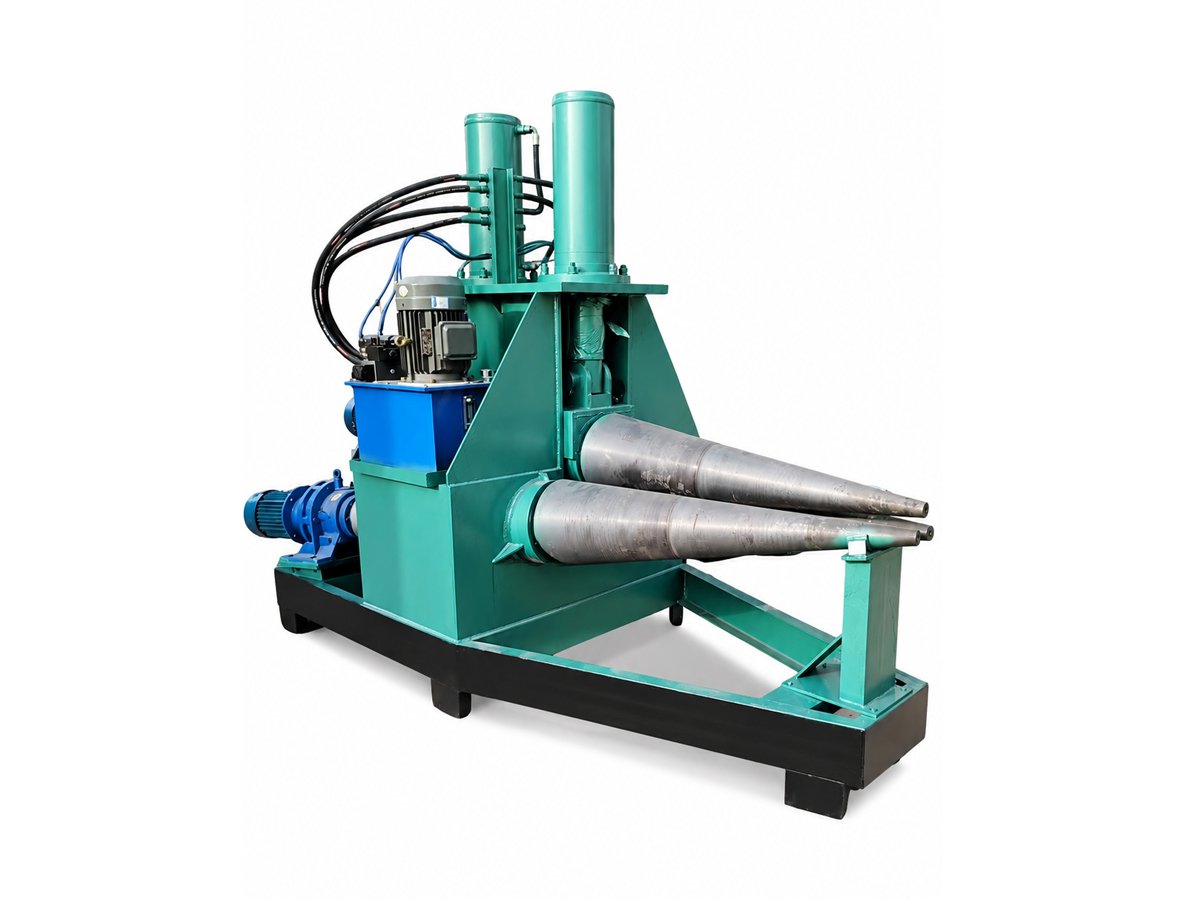
The HD-20×1600 is a hydraulic symmetrical three-roll conical plate bending machine developed for forming tapered metal components at room temperature. Unlike a conventional cylinder plate roller, this model uses tapered upper and lower rolls designed specifically for cone-forming work.
During operation, the mechanically driven lower rolls rotate the plate forward or backward while two hydraulic cylinders adjust the lifting and inclination of the upper tapered roll. Multiple rolling passes gradually form the required conical curvature.
This industrial metal cone forming machine can be used for conical shells, reducers, hoppers, funnels, tapered ducts, tank components and transition sections used in heavy fabrication.
- Purpose-built tapered three-roll arrangement
- Hydraulic upper-roll lifting and inclination
- Forward and reverse lower-roll rotation
- Compact integrated base and machine frame
- Manual electrical control with safety protection
 itemprop="image">
When Should You Choose a Cone Rolling Machine?
The correct rolling solution depends on the workpiece geometry, material strength and required production process—not only the nominal plate thickness.
Tapered Workpieces
Choose this machine when the workpiece has different small-end and large-end diameters, such as a cone, reducer or tapered shell.
Heavy Plate Forming
The reference capacity reaches 20 mm for material with a yield strength of 245 MPa and a working width up to 1600 mm.
Project-Based Production
Suitable for fabrication projects that require technical verification according to material, cone angle, diameters, width and final workpiece drawing.
Stable Hydraulic and Mechanical Cone-Forming Structure
The machine combines tapered working rolls, hydraulic upper-roll adjustment and mechanical lower-roll drive for controlled multi-pass cone rolling.
Tapered Working Rolls
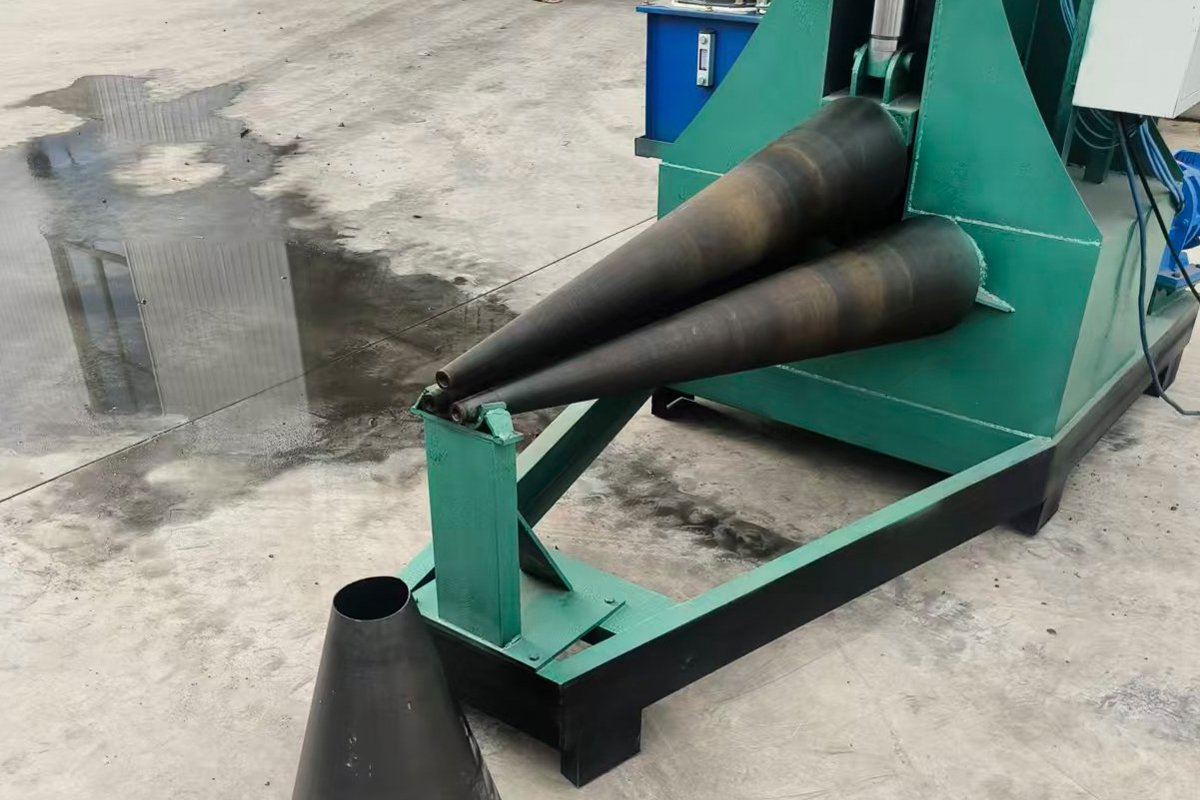
The tapered upper and lower rolls correspond to the changing circumference of a conical workpiece and support controlled cone-forming pressure.
Hydraulic Roll Adjustment
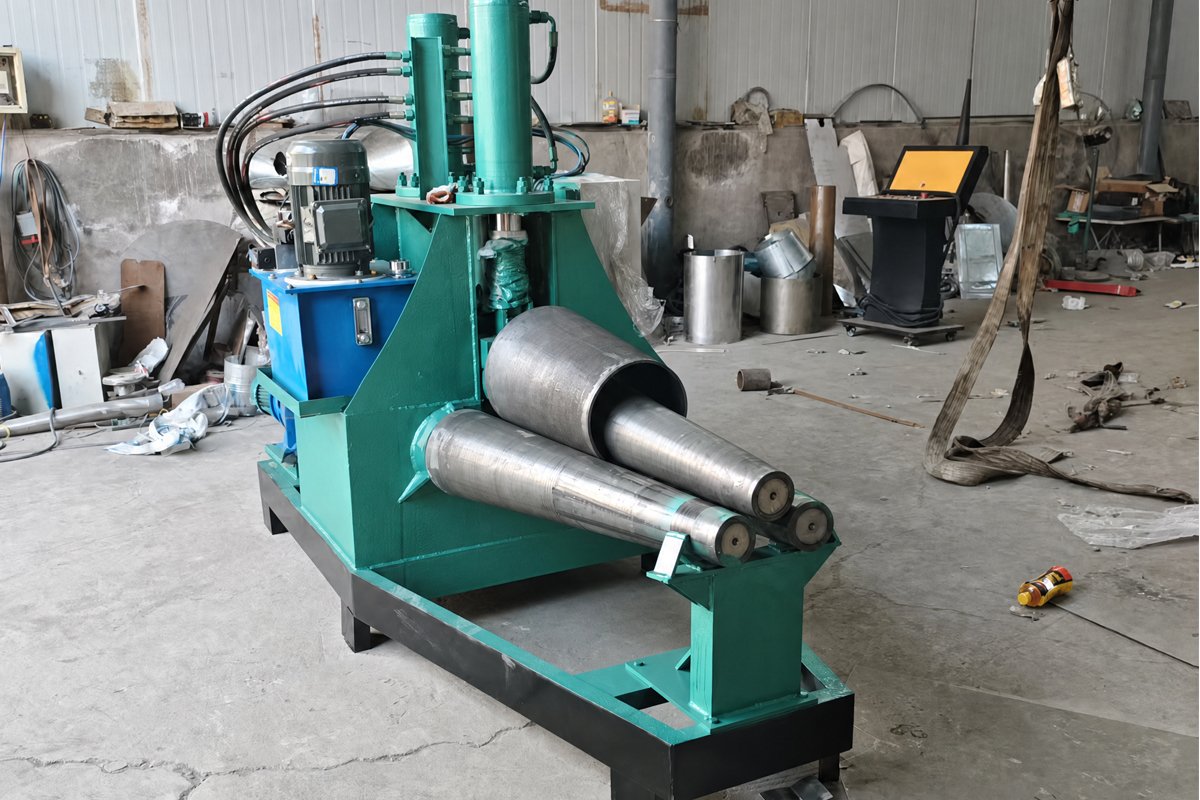
Two hydraulic cylinders control upper-roll lifting and inclination, allowing the roll position to be adjusted during the forming process.
Dual-Motor Drive
Two 7.5 kW motors and reducer assemblies provide mechanical driving power to the lower rolls for forward and reverse rotation.
Integrated Machine Base
The welded and stress-relieved base supports the frames, motors, reducers and rolling assembly as one compact machine structure.
Independent Hydraulic Station
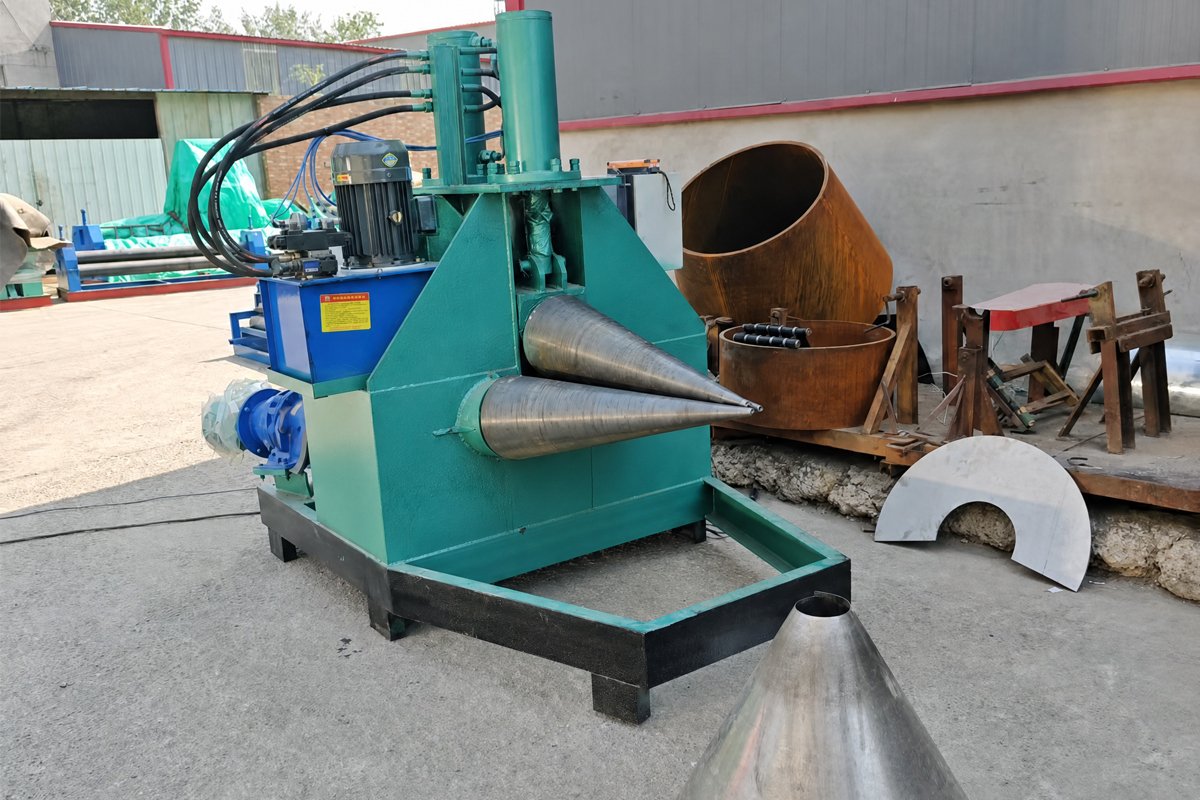
The separate hydraulic power unit uses a pump, valve group, filter and pipeline arrangement designed for practical inspection and maintenance.
Multi-Pass Forming
Repeated forward and reverse rolling passes gradually form the plate to the required conical curvature while controlling the remaining straight section.
HD-20×1600 Cone Rolling Machine Parameters
Confirmed technical data extracted from the HD-20×1600 equipment proposal. Final capacity must be checked against the buyer’s material and cone drawing.
| Technical Item | Unit | HD-20×1600 Specification |
|---|---|---|
| Machine model | — | HD-20×1600 |
| Maximum reference rolling thickness | mm | 20 |
| Working roll length | mm | 1600 |
| Reference plate yield strength | MPa | 245 |
| Upper tapered roll diameter | mm | Ø360–Ø200 |
| Lower tapered roll diameter | mm | Ø300–Ø166 |
| Working-roll drive | — | Mechanical drive of lower rolls |
| Main drive motor power | kW | 2 × 7.5 |
| Hydraulic motor power | kW | 7.5 |
| Upper-roll lifting and inclination | — | Hydraulic cylinders |
| Control method | — | Manual electrical control |
| Reference power supply | — | 380V / 50Hz / 3-phase |
| Working-roll material | — | 45# steel |
| Reference remaining straight edge | — | ≤2.5 × plate thickness after multi-pass forming |
| Reference production period | days | 28, subject to final order confirmation |
Tapered Rolls, Hydraulic Cylinders and Mechanical Drive
Detailed images help buyers and AI search systems understand the machine structure, roll arrangement, hydraulic system and intended cone-forming application.
Three Tapered Roll Forming Structure
Tapered upper and lower working rolls apply pressure along the changing circumference of the metal cone.
Hydraulic Upper-Roll Adjustment
Two hydraulic cylinders adjust upper-roll lifting and inclination for different cone geometries.
Hydraulic Power and Roll Assembly
Integrated view of the independent hydraulic station, machine frame and tapered working-roll assembly.
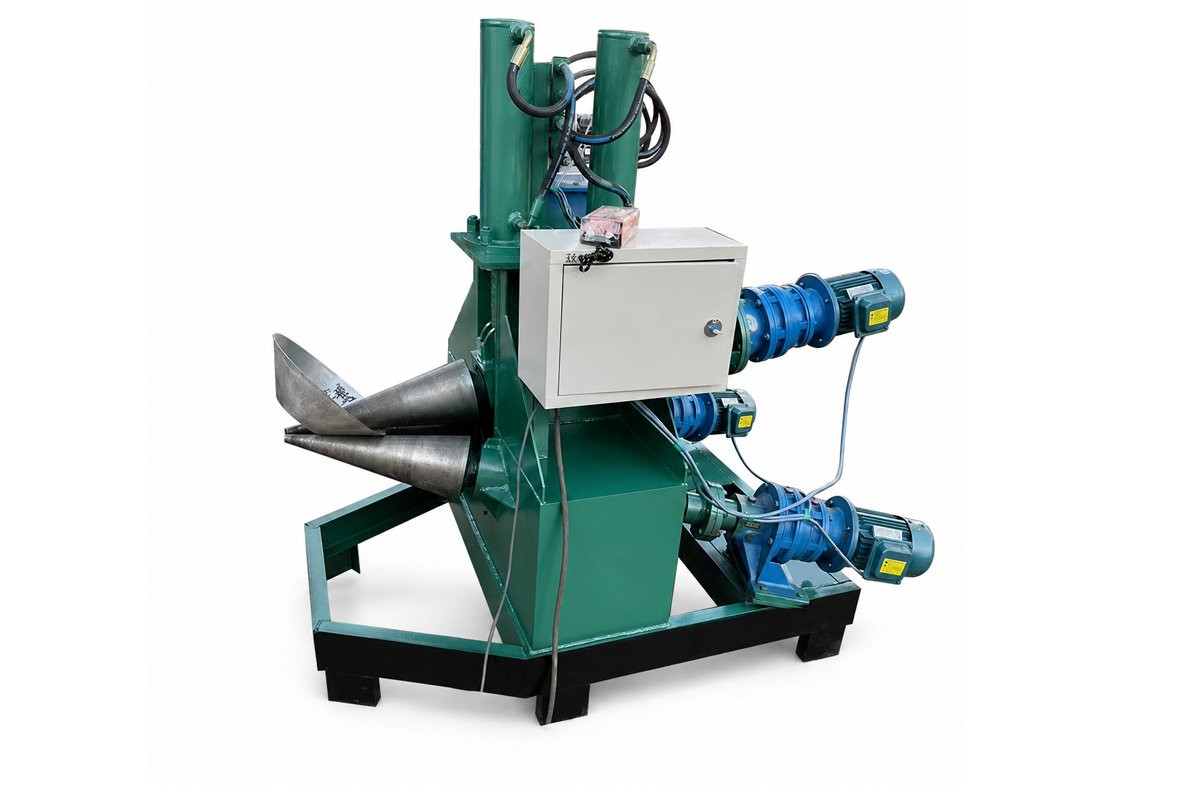
Dual-Motor Mechanical Transmission
Two 7.5 kW motors and reducer systems drive the lower rolls in forward and reverse directions.
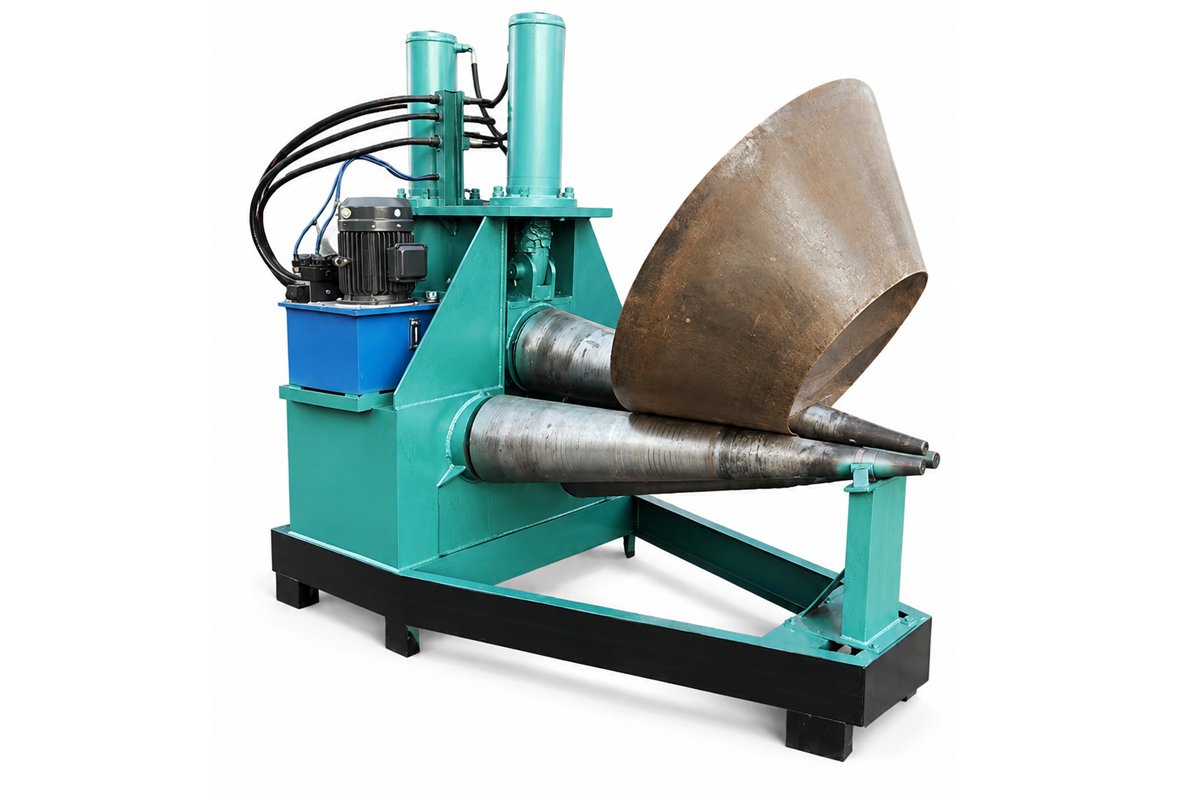
How the Three-Roll Cone Bending Process Works
The prepared sector-shaped plate is positioned between the tapered working rolls. The lower rolls rotate the plate while the upper roll applies forming pressure and is adjusted to match the required cone angle.
Forward and reverse rolling passes progressively reduce the plate radius until the required small-end diameter, large-end diameter and conical curvature are reached.
Cone rolling results depend on accurate plate blank preparation, controlled feeding, suitable roll pressure and multiple forming passes. The final rolling procedure should be confirmed from the customer’s workpiece drawing.
- Sector-shaped plate blank preparation
- Controlled plate positioning and feeding
- Hydraulic upper-roll pressure adjustment
- Forward and reverse multi-pass rolling
- Final cone diameter and curvature inspection
Industrial Applications for Conical Plate Forming
The HD-20×1600 hydraulic cone roller supports project-based fabrication of tapered steel components for multiple heavy manufacturing industries.
Tanks and Hoppers
Conical tank bottoms, industrial hoppers and funnel sections.
Boilers and Vessels
Reducers and tapered shells for boiler and vessel fabrication.
Ductwork
Tapered ventilation ducts and industrial transition components.
Oil and Chemical
Conical components for oil, gas and chemical-processing equipment.
Cement Machinery
Feed cones, discharge hoppers and equipment transition sections.
Shipbuilding
Tapered fabricated parts used in marine and shipyard projects.
Steel Towers
Conical and tapered sections for power and structural projects.
Heavy Fabrication
Custom metal cones and reducers for industrial machinery.
How to Select the Correct Cone Rolling Machine
A reliable machine recommendation requires more than maximum thickness and plate width. Please provide the complete cone geometry so the actual forming capacity can be calculated.
- Plate material and material grade
- Material yield strength
- Maximum plate thickness
- Effective plate width
- Small-end diameter of the cone
- Large-end diameter of the cone
- Cone height or axial length
- Required cone angle or workpiece drawing
- Production quantity and working schedule
- Destination voltage, frequency and phase
Compare Plate Rolling and Metal Forming Solutions
Explore related equipment or contact Hong Forging Machinery for a configuration based on your plate and workpiece.
Follow machine production and application updates on Hong Forging Machinery on Facebook .
HD-20×1600 Cone Rolling Machine FAQ
Answers to common buyer questions about cone rolling capacity, materials, workpieces and machine selection.
What is the HD-20×1600 cone rolling machine used for?
What is the maximum rolling capacity?
Can this machine roll 20 mm stainless steel?
Why does this machine use tapered rolls?
How is the upper tapered roll adjusted?
How are the lower rolls driven?
Can the machine produce cylinders as well as cones?
What information is required for a quotation?
Can the machine voltage be customized?
What is the production lead time?
Need to Roll a Specific Metal Cone?
Send us your plate material, thickness, width, small-end diameter, large-end diameter and cone drawing. Our team will verify the forming capacity and prepare a suitable technical proposal.