
W11S-40×2500 Hydraulic 3 Roll Plate Rolling Machine
A heavy-duty hydraulic 3 roll plate rolling machine with 40 mm central rolling, 35 mm plate-end pre-bending, 2500 mm plate width and PLC touchscreen positioning control for thick steel cylinder forming.
Upper Roll Universal Hydraulic Plate Rolling Solution
The W11S-40×2500 is an upper-roll universal hydraulic 3 roll plate rolling machine developed for pre-bending and cylindrical forming of medium and thick metal plates.
Based on plate material with a yield strength not exceeding 245 MPa, this model provides a maximum central rolling thickness of 40 mm, maximum plate-end pre-bending thickness of 35 mm and maximum plate width of 2500 mm.
The crowned upper roll moves vertically through two main hydraulic cylinders and horizontally through a mechanical moving system. Moving the upper roll into an asymmetric position allows both plate ends to be pre-bent before central rolling.
PLC and touchscreen control display the upper-roll vertical displacement and horizontal position, supporting process monitoring and position control during thick plate rolling.
- 40 mm central rolling under stated reference conditions
- 35 mm plate-end pre-bending capacity
- PLC and touchscreen position monitoring
- Hydraulic upper-roll vertical movement
- Mechanical upper-roll horizontal movement
- Hydraulic drop-end frame for unloading
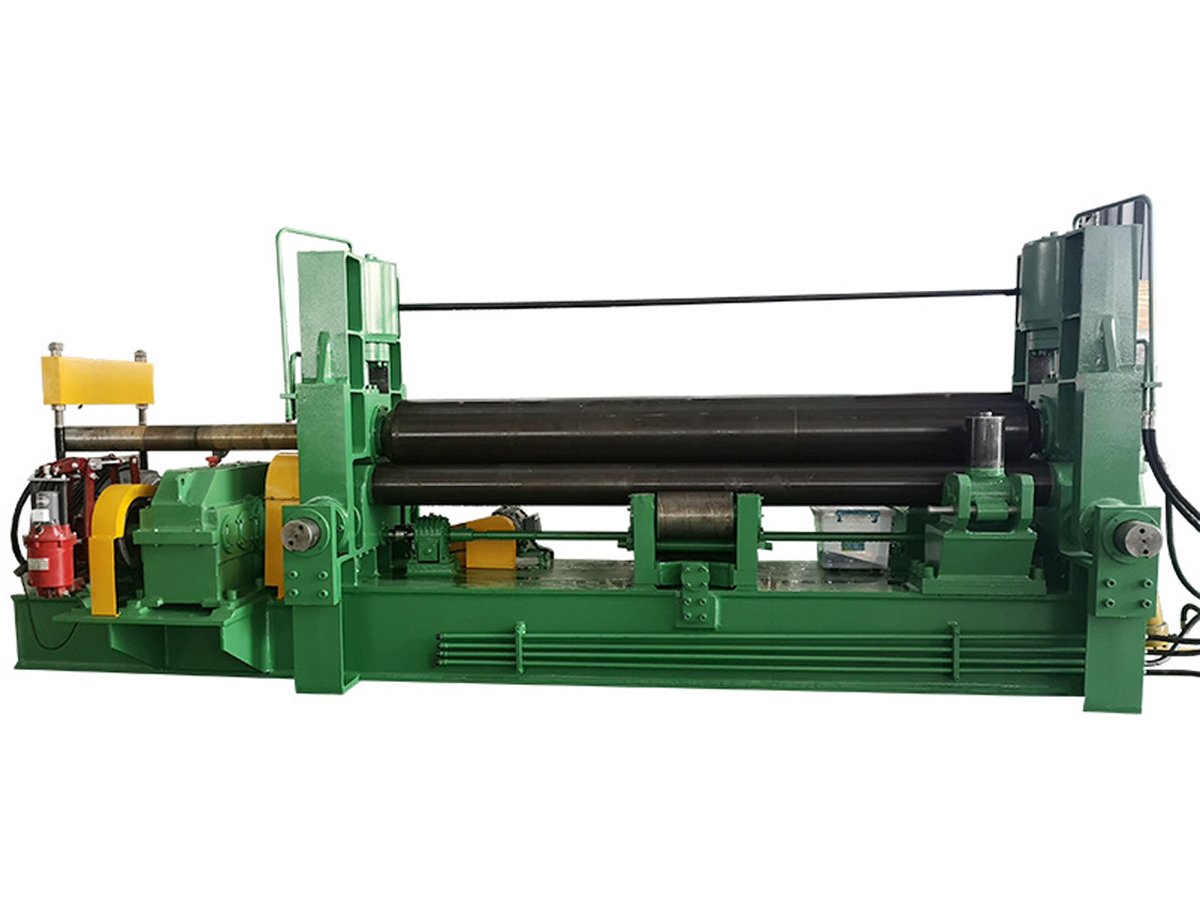
40 mm Rolling and 35 mm Pre-Bending Capacity
Central rolling thickness and plate-end pre-bending thickness are different capacities and must be compared separately when selecting a heavy-duty plate roller.
Central Rolling
Maximum central rolling thickness at 2500 mm width, Ø1500 mm reference diameter and material yield strength not exceeding 245 MPa.
End Pre-Bending
Maximum plate-end pre-bending thickness under the same stated material, width and reference diameter conditions.
Remaining Straight Edge
Reference remaining flat section at full load is no more than 2.5 times the plate thickness when correctly adjusted.
Powerful Hydraulic 3 Roll Plate Rolling Machine Structure
The W11S combines upper-roll pressure, horizontal offset movement, adjustable support rollers and PLC positioning for thick plate rolling and pre-bending.
Upper-Roll Universal Design
The upper roll moves vertically and horizontally, allowing asymmetric pre-bending and central cylindrical rolling on one machine.
380-Ton Pressing Force
Two main hydraulic cylinders provide the upper-roll pressing force required for medium and thick plate forming.
PLC Touchscreen Control
The touchscreen displays vertical cylinder displacement and upper-roll horizontal position for process monitoring.
Crowned Upper Roll
The Ø500 mm crowned upper roll helps compensate for working deflection and improve longitudinal seam consistency.
Adjustable Support Rollers
Four support rollers compensate for lower-roll deflection when processing plates of different thicknesses.
Hydraulic Drop-End Frame
The hydraulic drop-end opens after rolling so the completed cylindrical shell can be removed from the upper roll.
W11S-40×2500 Hydraulic 3 Roll Plate Rolling Machine Parameters
Confirmed technical data from the W11S-40×2500 specification. Final capacity must be verified against the buyer’s material, plate width and required cylinder diameter.
| Technical Item | Unit | W11S-40×2500 |
|---|---|---|
| Machine type | — | Upper-roll universal hydraulic 3-roll |
| Control system | — | PLC and touchscreen |
| Upper-roll pressing force | T | 380 |
| Maximum plate width | mm | 2500 |
| Working roll length | mm | 2550 |
| Maximum central rolling thickness | mm | 40 |
| Maximum pre-bending thickness | mm | 35 |
| Reference minimum rolling diameter | mm | Ø1500 |
| Reference material yield strength | MPa | ≤245 |
| Remaining straight edge at full load | — | ≤2.5 × plate thickness |
| Upper-roll diameter | mm | Ø500 |
| Lower-roll diameter | mm | Ø275 |
| Lower-roll center distance | mm | 460 |
| Rolling speed | m/min | Approx. 4 |
| Upper-roll pressing speed | mm/min | Approx. 120 |
| Support rollers | pcs / group | 4 / 1 |
| Main motor power | kW | 45 |
| Hydraulic motor power | kW | 22 |
| Horizontal moving motor | kW | 7.5 |
| Hydraulic working pressure | MPa | 19.5 |
| Working-roll material | — | 45# steel |
| Upper-roll hardness | HB | 260–300 |
| Reference power supply | — | 380V ±10% / 50Hz |
| Operating temperature | °C | −5 to 40 |
| Environmental humidity | % | ≤80 |
Working Rolls, Hydraulic Cylinders and Main Drive System
Detailed images show the structural components used for thick plate rolling, end pre-bending, steel cylinder forming and finished workpiece unloading.
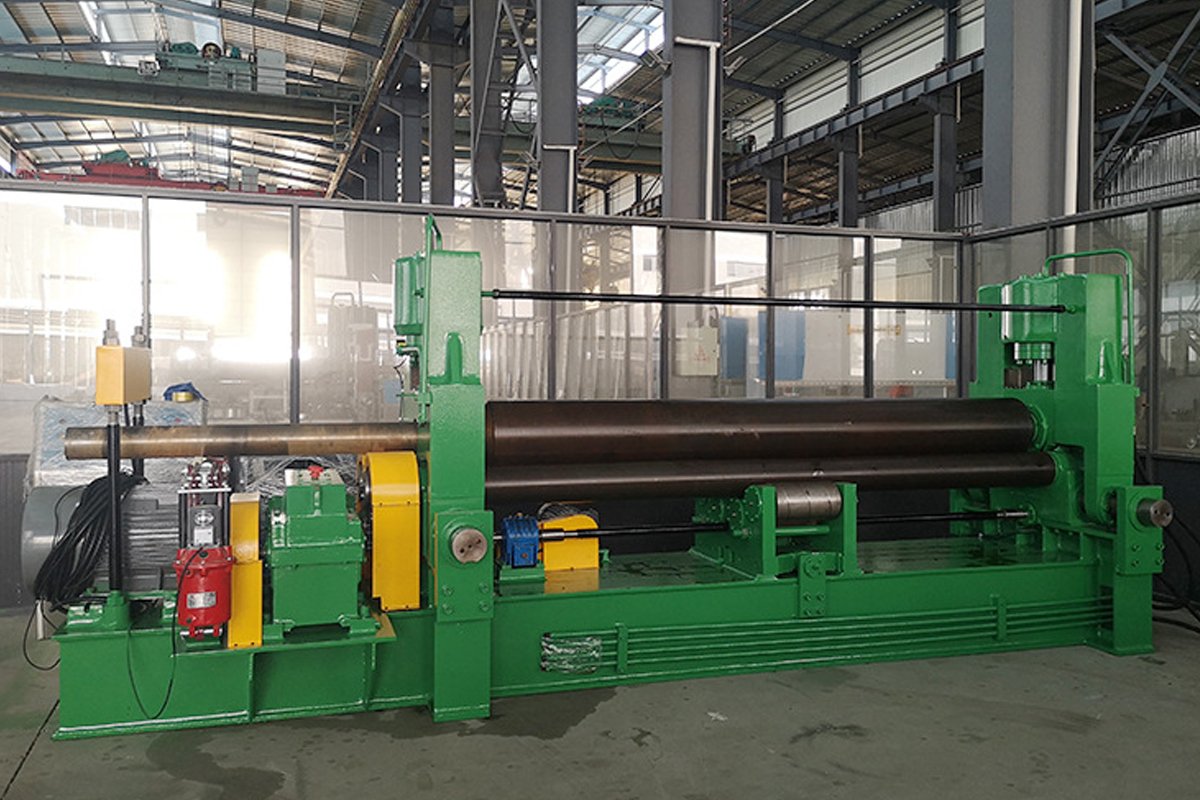
Working Roll and Transmission Structure
Crowned upper roll, lower working rolls, support structure and mechanical transmission used for plate feeding and forming.
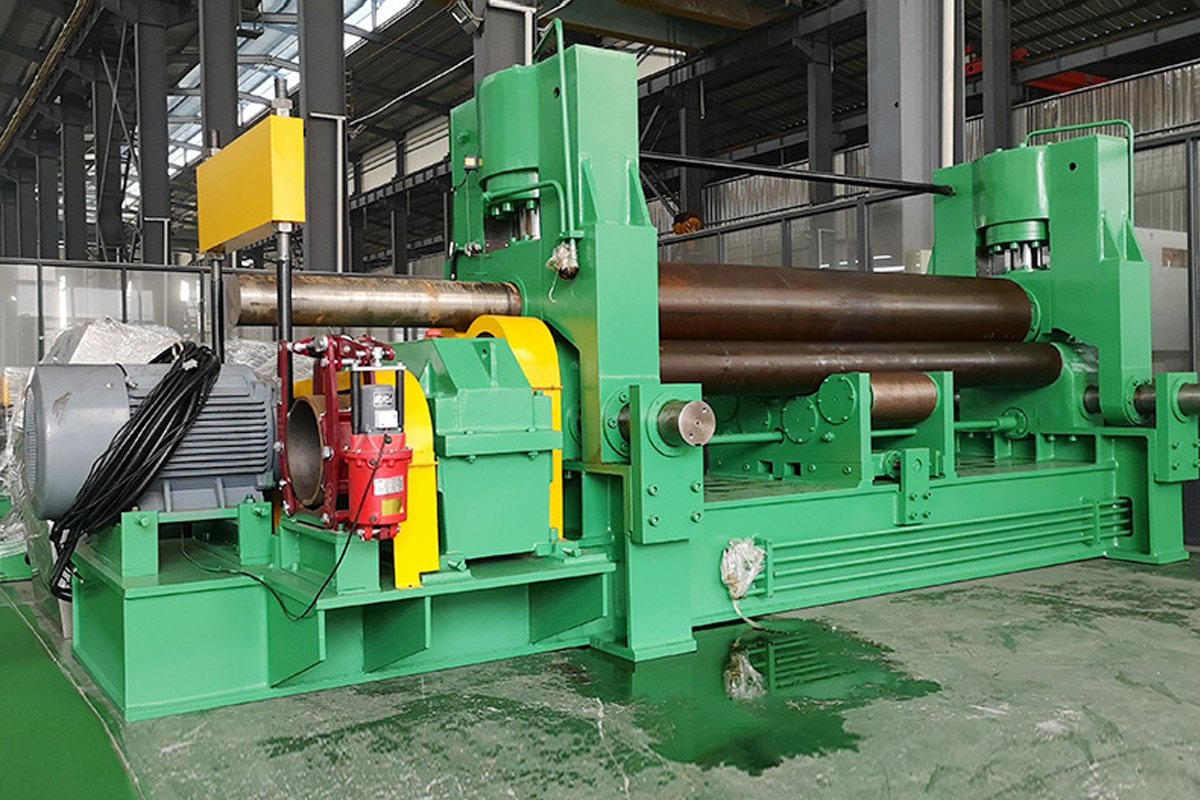
Main Drive and Reducer System
The 45 kW motor, cylindrical gear reducer and output gears transmit forward and reverse torque to the lower rolls.
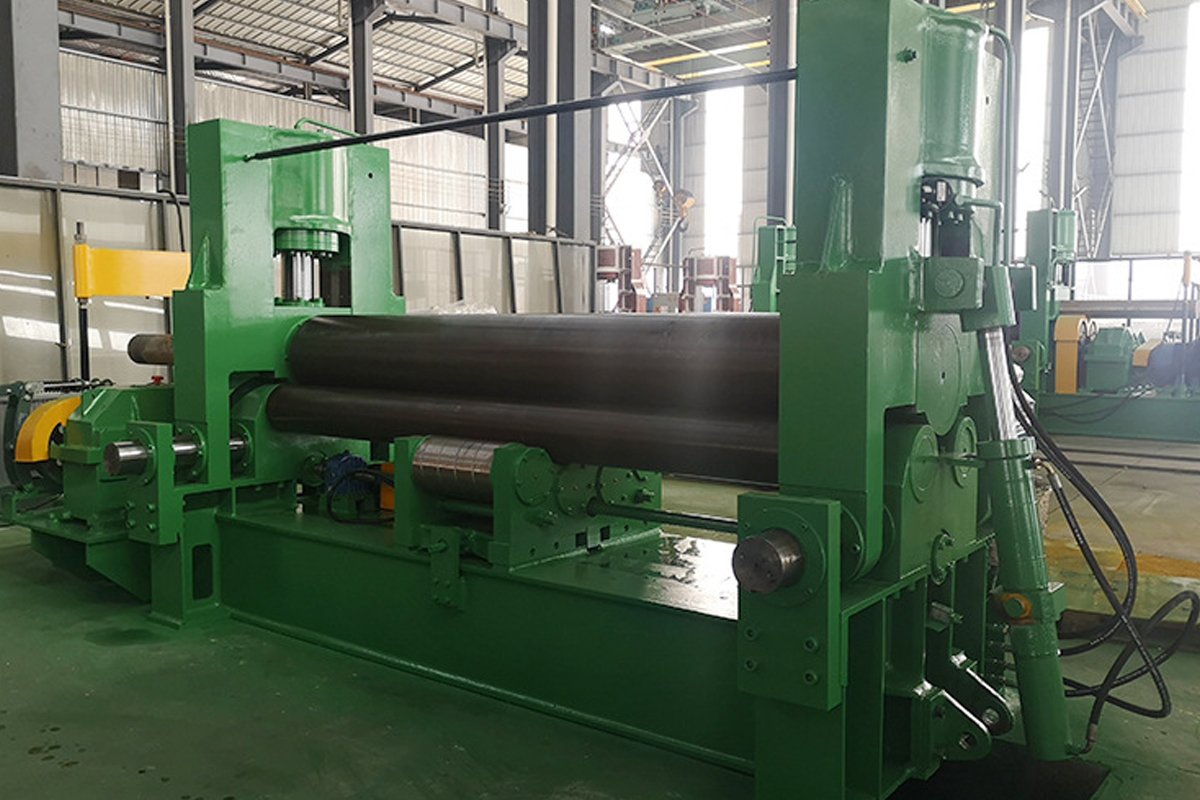
Hydraulic Upper-Roll Lifting
Two main hydraulic cylinders provide up to 380 tons of pressing force and control vertical movement of the Ø500 mm upper roll.
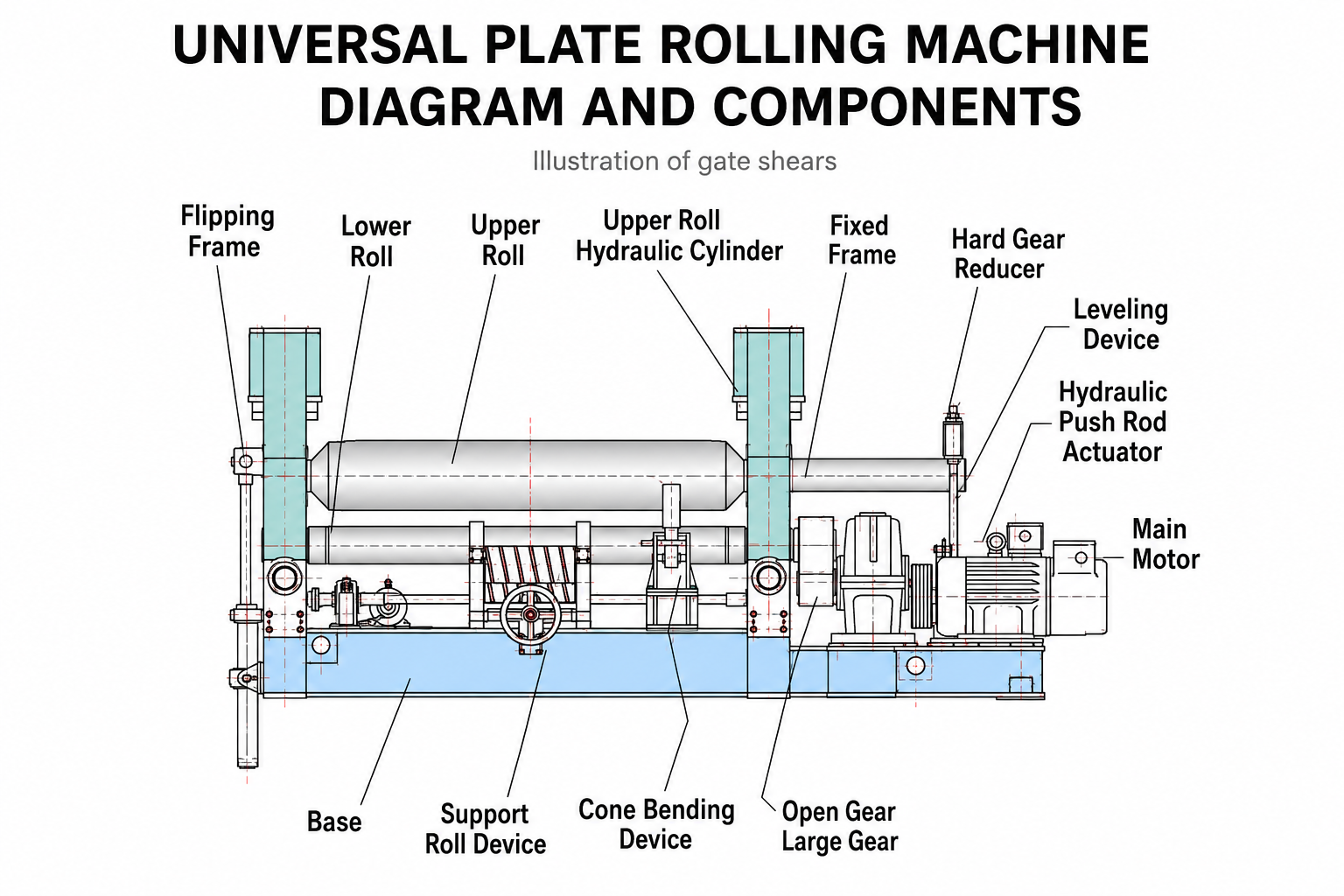
Machine Structure Diagram
English technical diagram showing the working rolls, horizontal moving mechanism, hydraulic cylinders, drop-end frame and main transmission.
How the Hydraulic 3 Roll Plate Rolling Machine Works
The W11S rolling process combines asymmetric plate-end pre-bending, symmetrical central rolling and hydraulic drop-end unloading.
Load and Position
Raise the upper roll, insert the plate and move the upper roll horizontally to the asymmetric position.
Pre-Bend First End
Lower the upper roll, clamp the plate and rotate the lower rolls to pre-bend the first plate end.
Pre-Bend Second End
Reposition the plate and repeat the controlled pre-bending procedure on the opposite end.
Central Rolling
Return the upper roll to the symmetrical position and use repeated passes to complete the cylinder.
PLC Monitoring and Hydraulic Safety Protection
The electrical system includes an electrical cabinet, operating console and handheld control box. The touchscreen displays upper-roll cylinder displacement and horizontal movement position.
Hydraulic circuits provide pressure adjustment, synchronization and movement-speed control. Relief valves protect the upper-roll lifting and lowering circuits from excessive pressure.
Position switches and electrical interlocks help prevent incorrect movements when the drop-end frame or upper roll is not in the required position.
- PLC programmable controller
- Touchscreen position display
- Upper-roll vertical and horizontal monitoring
- Motor overload and short-circuit protection
- Emergency-stop controls
- Drop-end and upper-roll safety interlocks
Thick Plate Rolling and Steel Cylinder Forming
This industrial plate roller supports cylinder, shell and curved plate production for heavy metal fabrication projects.
Pressure Vessels
Thick cylindrical shells for vessel fabrication.
Storage Tanks
Tank shells and large-diameter steel cylinders.
Boilers
Rolled shells and curved boiler components.
Shipbuilding
Marine plate forming and structural shell production.
Oil and Chemical
Cylindrical processing and storage equipment.
Hydropower
Heavy rolled sections for water and power projects.
Steel Structures
Curved plate and cylindrical structural components.
Heavy Machinery
Machine shells, drums and fabricated cylinders.
How to Select a Hydraulic 3 Roll Plate Rolling Machine
Selection should be based on material strength, actual pre-bending requirement, plate width and finished cylinder diameter—not only nominal rolling thickness.
- Plate material and material grade
- Material yield strength
- Maximum central rolling thickness
- Required plate-end pre-bending thickness
- Maximum effective plate width
- Minimum finished cylinder diameter
- Maximum finished cylinder diameter
- Workpiece length and approximate weight
- Production quantity and working schedule
- Workpiece drawing and tolerance requirements
- Destination voltage and frequency
- Side or overhead support requirements
Compare Plate Rolling and Metal Forming Solutions
Explore related machines, factory capability and technical support before confirming your equipment configuration.
Follow machine production and application updates on Hong Forging Machinery on Facebook .
W11S-40×2500 Plate Rolling Machine FAQ
Answers to common buyer questions about rolling thickness, pre-bending, diameter, controls and model selection.
Is the W11S-40×2500 capacity 40 mm or 35 mm?
What is the reference minimum rolling diameter?
How does the machine pre-bend both plate ends?
How is the upper roll controlled?
How does the machine reduce flat ends?
How is the completed cylinder removed?
Can it roll 40 mm stainless steel?
What is the difference between 3-roll and 4-roll machines?
What information is required for a quotation?
Can the voltage and configuration be customized?
Need to Roll 40 mm Thick Steel Plate?
Send your material, yield strength, thickness, plate width, pre-bending requirement, minimum cylinder diameter and drawing. Our team will verify the actual capacity before preparing a technical proposal.